|
|
|
|
|
|
||
| site map | |
|
|
|
|
|
|
|
history of art relating
|
|
|
|
|
||
new! Cathedrale Saint-Gatien at Tours
the perpendicular or English style of cathedral the fire at the cathedral of Notre-Dame de Paris Stone tracery in church and
cathedral construction stained glass and cathedrals in Normandy fortified churches, mostly in Les Landes cathedral labyrinths and mazes in France Germans in France on first arriving in France - driving
Transbordeur bridges in France and the world 2: focus on Portugalete, Chicago,
Rochefort-Martrou France’s western isles: Ile de Ré Ile de France, Paris: in the context of Abelard and of French cathedrals Marianne - a French national symbol, with French definitive stamps la Belle Epoque
Pic du Midi - observing stars clearly, A64 Futuroscope the French umbrella & Aurillac 50 years old:
Citroën DS the forest as seen by Francois Mauriac, and today bastide towns what a hair cut! m & french pop/rock
|
this page is now retired - please go to history of art relating to stained glass The ‘cleverer’ the artist became, the more they tried to flatter and appease the patrons with prettified portraits and brutalistic, emotional art vaunting ‘great deeds’. The ‘cleverer’ the artists became, the more they painted pictures on stained-glass windows instead of exuberantly exploiting the sheer crude colour and joy in the light. Not only did they become ‘cleverer’ with their perspective tricks/illusions, they even ‘improved’ their glass-production and handling techniques. The craftsmen learnt to make the glass smooth and to remove the bubbles, thus turning the sparkling, dancing light of early stained glass into a dead ‘artists’ palette. They learnt to draw their lines with silver nitrate and do away with the marvellous tracery and variations of much of the lead framing. Well, you might like it, many people rave over it, and certainly some of it is rather pretty-pretty.
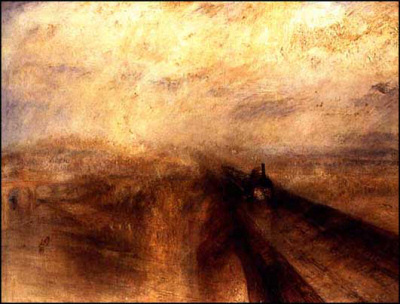
So somewhere, during the early fifteenth century [1400-1500], they lose me, just as the canvas and wall painters started to lose my attention after Uccello [1397 - 1475]. From the invention of the camera, from Turner [1755 - 1871] onward, serious artists have steadily gone back to basics and tried to relearn their trade. Most of this relearning process has only happened in stained glass since around the 1950s; after all, this is the very heart of the unimaginative classes who tend to commission and thereby pay the artists. Very few such people ever want to rock the boat. They have been carefully taught what is ‘good taste’, which of course means repeating yesterday’s work and god preserve us from anything unusual or ‘innovative’.
Not for them, high up on the cathedral parapet a fellow showing his arse to the bishop’s palace, let alone the priest enjoying himself with a donkey. You see, the medievals they knew how to live, how to get drunk, how to party. Market day would be held in Chartres cathedral, where the floor slopes so it can be swilled down easily when the market day is over. All those dull grey, ‘tasteful’ statues outside the front would be painted in a riot of technicolour. The pillars inside were often in beautiful geometric patterns. But gradually, the old world and the old religion is coming back. [ref. to abelard2]. The steady puritanical movements, from Bernard of Claiveaux to Martin Luther to Oliver Cromwell, have destroyed much of this heritage, wherever they could, in much the manner of the taliban. The cathedrals that rose from 1170 to 1270 were a combination of innovation and workman-like solidity. But once the basic plan was in place, all those smart-arses that followed could not help decorating and doodling over everything in sight. And then along came the critics and academicians who divided this gradual decadence and dilettantism into various ‘styles’ for you to learn on art appreciation courses and thence repeat back in exams. As the modern stained-glass artists recover the medium, specialist glass factories now produce coloured glasses an inch thick (complete with all the knowledge of modern chemistry to obtain a palette that even the medieval craftsmen could once again envy). These glasses are deliberately filled again with bubbles and the surfaces crude and rough, to once more bring the light alive. The modern craftsman deliberately chip the glass and set it in concrete, and various resins to make the glass sing. |
| abstracts | briefings | information | headlines | loud music & hearing damage | children & television violence | what is memory, and intelligence? | about abelard | ||
© abelard, 2005, 06 march the address for this document is https://www.abelard.org/france/cathedrals4-angers.php |